A PUBLIC RECORD · FIRST RESEARCH EDITION
Remember the person.
Follow the record.
A growing record of enslaved people and their families. Trace the documents, identify who sold and bought them, and follow the connections that remain.
Explore the peopleHow we establish a connection10 initial U.S. profiles
6 recorded under 16
23 mixed evidence entries
A beginning, not a complete census. Last reviewed 25 November 2026.
THE PEOPLE REGISTER
Every connection needs a source.
Select a person to follow family relationships, transactions and open questions. A first appearance is not necessarily a birthplace; a last appearance is not a death record.
CHILDREN, FAMILY & AUTHORITY
Ask who had power.
Document what they did.
For every child, we investigate parents and caregivers, their actual ability to protect the child, the seller’s claimed authority, payment, resistance, and the institutions that enabled a transfer.
Under 16 is a research filter here. It is not presented as a universal historical age of legal majority. Applicable law must be established for the place and date.
THE EVIDENCE REGISTER
Read the document trail.
The wider register includes ancient context, African trading networks and U.S. records. These are separate cases, not a single connected family tree. Twenty-three entries do not mean twenty-three independently inspected original contracts.
AN ORIGINAL RECORD · TWO SIDES
A buyer becomes a seller.
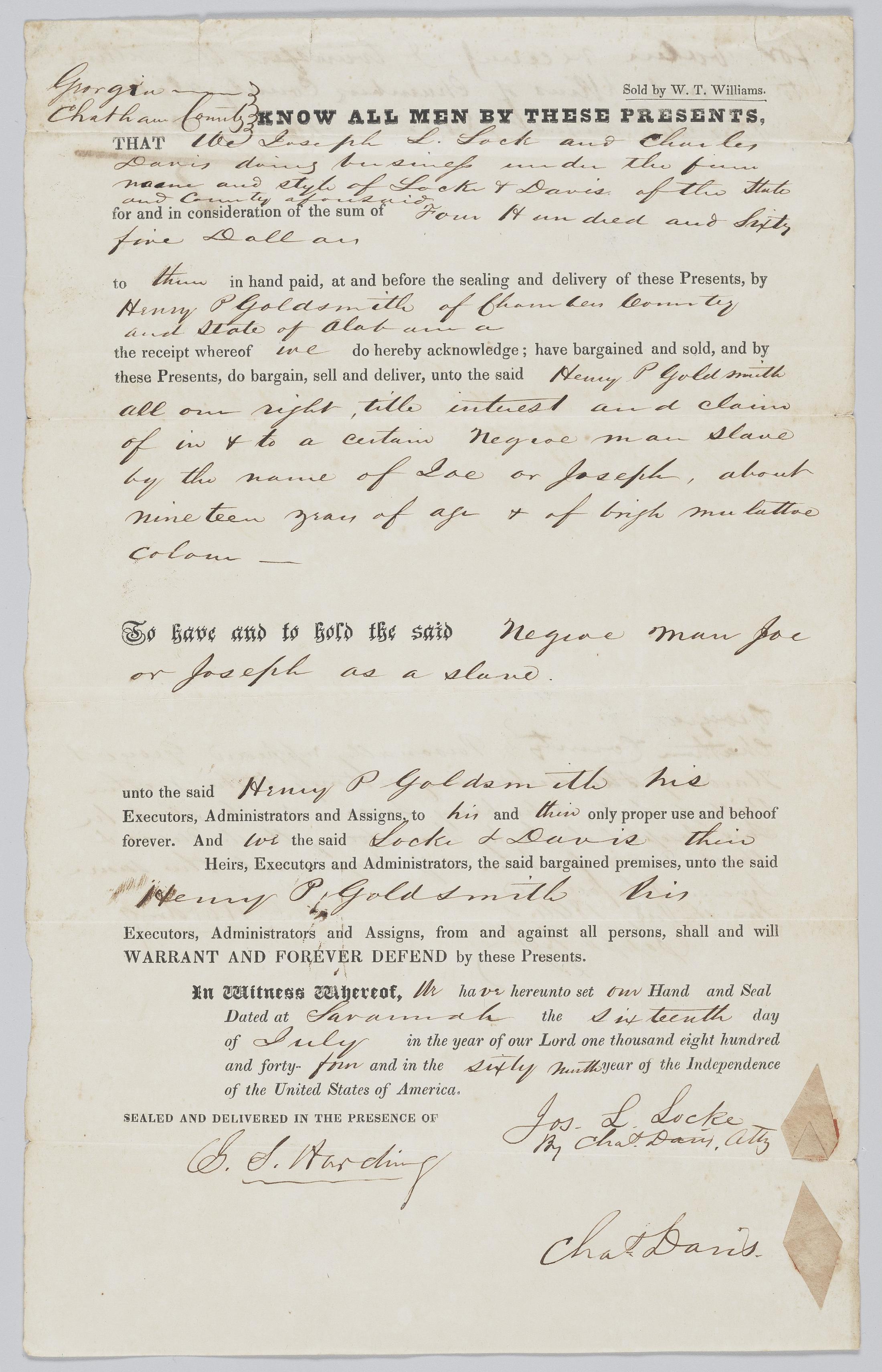
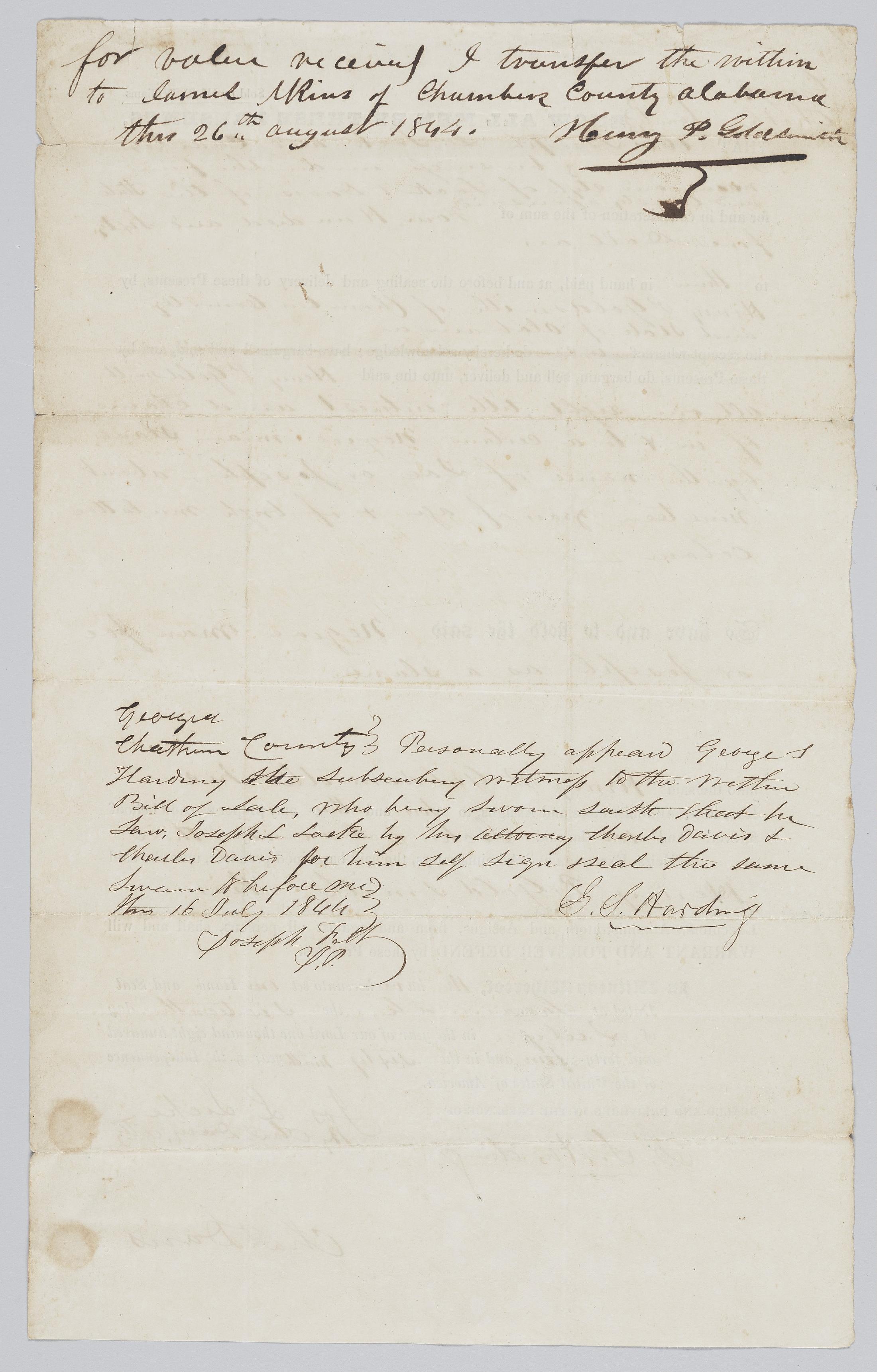
Joe, also called Joseph, appears in the July 16, 1844 sale from Lock & Davis to Henry P. Goldsmith. The reverse records Goldsmith’s transfer to James Akins on August 26, 1844.
Both original images read 1844. They resolve an apparent 1864 error in an older volunteer transcription. No separate resale amount is specified.
Follow Joe / Joseph’s recordSmithsonian NMAAHC · object 2018.43.2.
View the museum record
WHAT WE STILL NEED TO FIND
The missing links stay visible.
The aim is to account for every person the surviving evidence can identify. Records can be missing, destroyed, unnamed or contradictory. Group totals are kept as group records until individual identities can be transcribed and linked.
OUR STANDARD
A person is more
than a transaction.
We preserve the name as recorded, attach documents to specific claims, and distinguish family ties from ownership claims. A shared surname, community or location does not prove kinship.
Parental sale is recorded where supported. Where parents are unidentified, their consent, resistance or failure is not inferred. A legal ownership claim is recorded without endorsing its legitimacy.
What each record must retain
- A stable person identifier and name variants
- Dates, ages and places, including uncertainty
- Seller, purchaser, agent and benefit or payment
- Parentage, family relationships and authority evidence
- Source, archive reference and review reached
- Conflicting readings and open research tasks
How the family trail continues
Later census, emancipation, military, church, probate and Freedmen’s Bureau records are research routes, not automatic identity matches.
National Archives research guidesSmithsonian Freedmen’s Bureau Search Portal